
Old Smokey’s Fireplace & Chimney: Gas Fireplace Service in Kendallville IN
At Old Smokey’s Fireplace & Chimney, we take pride in helping Kendallville homeowners keep their gas fireplaces running as safely, cleanly, and reliably as possible. Our team has decades of hands-on experience working with direct-vent, vent-free, and insert-style gas fireplaces, and we’re committed to giving every homeowner clear communication, careful workmanship, and long-lasting results. Whether your system needs routine servicing, a diagnostic check, or repairs after a long period of disuse, we’re here to keep it performing as efficiently as possible all year. For gas fireplace service near you, reach out now.
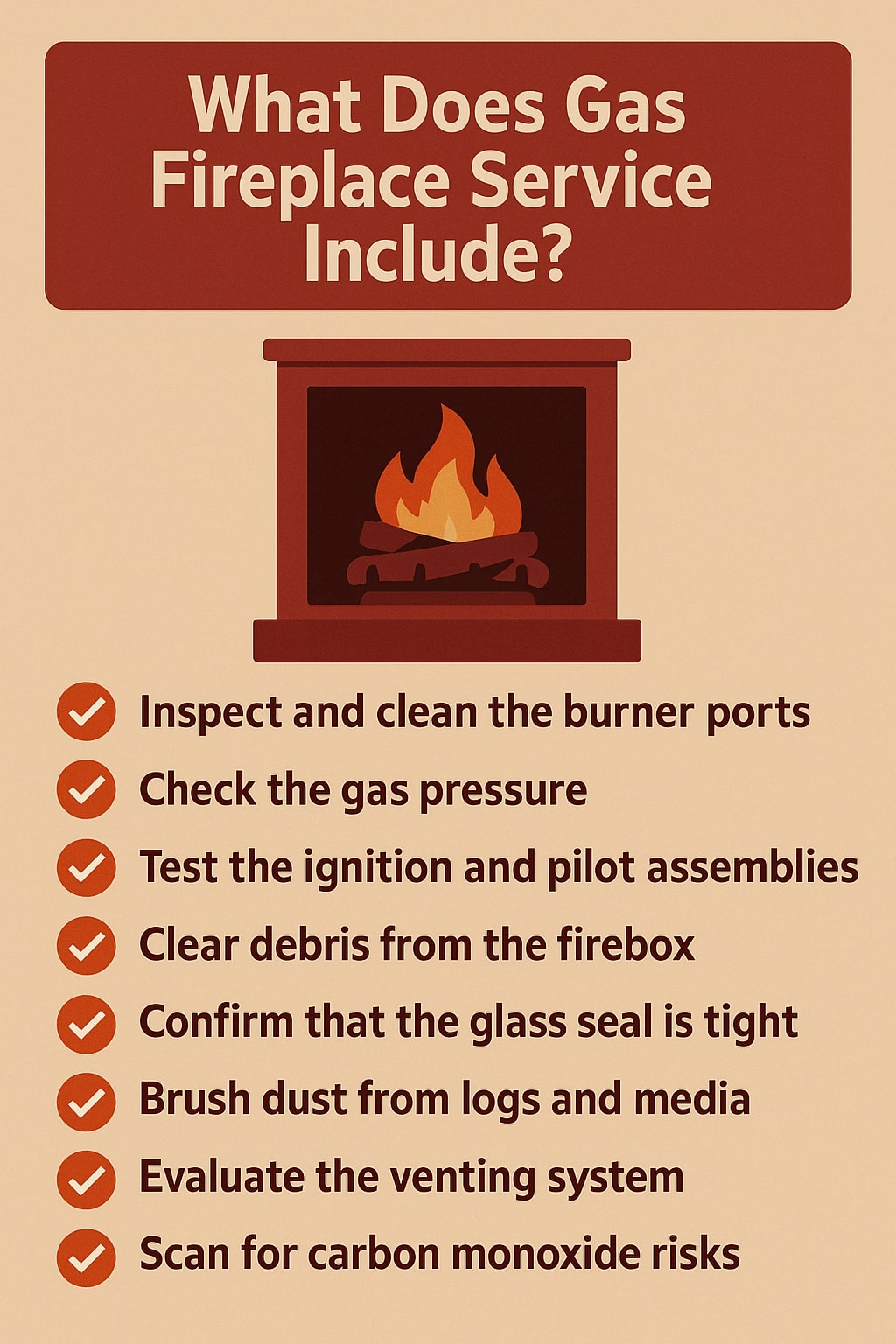
What Does Gas Fireplace Service Include?
Gas fireplaces may look low-maintenance from the outside, but they contain burners, valves, sensors, ignition systems, seals, venting components, and safety controls that all need periodic attention. When we come out for a service appointment, we complete a detailed multi-point check designed to catch problems early and keep your unit operating more reliably.
We inspect and clean the burner ports, check the gas pressure, test the ignition and pilot assemblies, clear debris from the firebox, confirm that the glass seal is tight, brush dust from logs and media, evaluate the venting system, and scan for carbon monoxide risks. Many issues that cause weak flames, delayed ignition, odors, or soot buildup start with a minor malfunction in one of these areas, so our goal is to stay ahead of them with proper annual servicing.
We’re also trained to identify early warning signs that a system is drifting out of spec. Sometimes a flame that looks slightly more yellow, a faint clicking noise, or a subtle draft change can point to developing problems that a homeowner wouldn’t notice. Our servicing gives you the confidence to use your fireplace without guessing if something is “off.”
Why We Love Serving Kendallville IN
Kendallville is a charming northeastern Indiana community known for its beautiful parks, friendly neighborhoods, and a pace of life that strikes the perfect balance between peaceful and active. Bixler Lake Park is one of the area’s favorite outdoor spots with trails, water activities, and picnic areas. Historic Downtown Kendallville offers a classic small-town feel with shops, eateries, and seasonal events that bring everyone together. We love serving a community where homeowners take pride in their properties and value comfort during chilly Midwestern seasons. Helping local families enjoy warm, welcoming living spaces is something we truly enjoy.
How Do Power Outages or Storm Surges Affect a Gas Fireplace?
Homeowners often assume gas fireplaces are unaffected by storms because they don’t rely on traditional chimney drafting the same way wood units do. While gas systems tend to hold up well, they can still experience complications after severe weather.
Prolonged power outages can prevent electronic ignition systems from starting. Some units have battery backups, but many do not, which means no ability to generate a spark until the power returns. Storm surges or lightning can also create electrical interference that damages wiring or circuit boards inside the fireplace, leading to intermittent performance.
High-wind storms sometimes push debris into exterior vents, which can reduce draft or cause the safety sensors to shut the unit down. In recessed exterior installs, drifting snow, wind-blown leaves, or even spring pollen can begin blocking the termination caps. If the unit senses poor airflow, it may fail to ignite or shut down mid-burn.
Another overlooked issue is moisture infiltration. Heavy rain driven by strong winds can push water into small cracks around the vent assembly. Even a little moisture can corrode burners, clog ports, or cause erratic flames. If your fireplace sputters after a storm, shuts off randomly, or produces unfamiliar odors, it’s best to have us run a full system check so you’re not unknowingly running a compromised unit.
How Can Homeowners Tell When Gas Fireplace Components Are Wearing Out?
Because gas fireplaces burn cleanly, the early signs of wear are often subtle. Many of the systems that keep your fireplace running rely on pressure, electrical current, and precisely calibrated airflow. Even small deviations can lead to performance issues.
Things to watch for include:
• Flames that appear weak, low, or uneven
• Delays between turning the system on and actual ignition
• A pilot light that flickers or won’t stay lit
• A change in flame color, especially excessive yellowing
• Clicking, whistling, or popping sounds
• A faint smell when the unit first starts up
• The glass front developing haze or residue faster than normal
These symptoms can point to clogged burner ports, a failing thermocouple or thermopile, incorrect gas pressure, deteriorating gasket seals, or venting obstructions. Even microscopic dust on sensors can interfere with the fireplace’s ability to run smoothly.
One common question we hear is whether earthquakes or minor tremors can affect gas fireplaces. In areas that experience seismic activity, small movements can loosen fittings, shift vent pipes, or misalign components enough to cause ignition problems. While earthquakes are not common in Northern Indiana, settling or structural shifts in the home can create similar conditions. During service, we double-check the alignment and stability of key parts to prevent strange behavior later.
Can a Gas Fireplace Become Unsafe if It Hasn’t Been Serviced in a Few Years?
Gas fireplaces are designed with layers of built-in safeguards, including automatic shut-off sensors, oxygen depletion monitors, and sealed combustion chambers. But these features depend on clean parts, proper airflow, and components that function correctly. When a unit goes unserviced for years, several risks can develop.
Dust and pet hair can clog air inlets or interfere with pilot assemblies. Logs can shift slightly from their original placement, which may create soot buildup or lead to incomplete combustion. Gaskets can dry out and lose their seal. Venting systems can develop partial blockages from insects, birds, or vegetation. Ignition electrodes can wear down, forcing the unit to attempt inefficient starts.
Creosote is not a concern with gas systems, but residue can still build up on the glass or in the burner area when combustion isn’t balanced. A single missed annual inspection may not create an immediate hazard, but multiple years of skipped service can allow enough debris and degradation to interfere with how safely the unit operates. The most important issue is carbon monoxide risk if airflow becomes compromised. Regular service helps prevent this by ensuring complete combustion and unobstructed venting.
How Does Nearby Construction or Landscaping Change a Gas Fireplace’s Draft Over Time?
Draft problems aren’t just for wood-burning systems. Even though many gas fireplaces are direct-vent and sealed, they still rely on precise airflow through their intake and exhaust channels. Changes around your home can impact that airflow without you realizing it.
If a neighbor builds an addition that blocks wind flow, if a new roofline alters the path of exterior vents, or if trees mature and grow near the termination cap, the unit may struggle to maintain consistent draft. This can cause flame lift, unexpected shut-offs, or error codes.
Snow drifts, mulch buildup, or even annual leaf accumulation can slowly creep up around an exterior vent over time. The fireplace may work fine in fall, then struggle in January because snow or ice has restricted air movement. In spring, pollen can accumulate on screens, creating a thin but stubborn coating that reduces intake efficiency.
Because these changes happen gradually, many homeowners don’t connect the dots right away. During a servicing appointment, we evaluate external conditions as well as internal components so your gas fireplace continues drafting as it should.
What Should Homeowners Do If the Glass Has Condensation After Heavy Rain?
A little moisture fogging on the inside of the glass can occur occasionally, especially during temperature swings. But if you notice persistent or heavy condensation after rain, your unit may be experiencing water intrusion or pressure imbalance.
Moisture entering the system can corrode burners or valves, weaken seals, and cause ignition failures. Direct-vent fireplaces can draw damp air into the combustion chamber if exterior wind conditions force water toward the termination cap. If the flue or vent is still damp and you light the system, the fireplace may burn unevenly or struggle to start.
We check the vent seals, cap integrity, glass gasket, and any exterior exposure points to determine the cause. We also dry out affected components and ensure everything is drafting correctly. If you ever see dripping water inside the unit, stop using it and call us right away for inspection.
Call Old Smokey’s Fireplace & Chimney for Gas Fireplace Service in Kendallville IN
Our team is committed to helping Kendallville homeowners keep their gas fireplaces running smoothly, cleanly, and as safely as possible. Whether your unit needs annual service, a performance check, or repairs after a storm or long period of disuse, we’re here to help. Contact Old Smokey’s Fireplace & Chimney today to schedule your gas fireplace service and keep your home warm, inviting, and ready for Indiana’s colder months.